

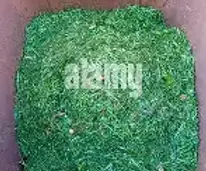
Freshly cut grass contains a high proportion of water.
Although a handful of grass cuttings feels light, an entire lawn can produce a substantial volume of vegetation.
When all those cuttings are placed together in a wheelie bin, their combined weight can be much greater than expected.
The problem increases when the grass is:
Freshly cut and moist
Cut following wet weather
Packed tightly into the bin
Left exposed to additional rain
Mixed with wet leaves
Left inside for an extended period
Repeatedly compressed to make more room
Why Does Wet Grass Become Even Heavier?
Grass can retain moisture both within the plant material and between individual cuttings.
When wet cuttings are packed tightly together, water can remain trapped throughout the mass.
Instead of a bin containing loose vegetation with plenty of air between the cuttings, you can end up with a dense mass of wet organic material.
That difference can be considerable when an entire wheelie bin is involved.
Why Does Pushing Grass Down Make the Problem Worse?
We've probably all done it.
The bin looks full, so you push the grass down with your hands, a garden tool or another load of cuttings to make room for more.
The problem is that compression removes the air spaces between the grass cuttings.
You can then fit considerably more material into the same wheelie bin.
More grass means more weight.
If you repeat the process several times, the bottom of the bin can become packed extremely tightly.
What Happens to Grass at the Bottom of the Bin?
The grass at the bottom carries the weight of everything above it.
As more material is added, the lower layers become increasingly compressed.
The grass also begins decomposing naturally.
Over time, the bottom of the bin can contain material that is:
Wet
Dense
Compressed
Partially decomposed
Stuck together
Difficult to remove
This is why old grass sometimes remains inside even when a wheelie bin is turned upside down.
Does Rain Make a Garden Waste Bin Heavier?
It can.
If additional water gets into a bin containing absorbent organic material, the contents can become wetter.
A lid that is regularly left open can allow rain to enter the bin.
However, even a closed bin can contain very wet vegetation if grass was cut during damp conditions or placed inside immediately after rain.
Keeping the lid closed where practical can at least prevent unnecessary additional rainfall entering.
Can Wet Grass Make My Garden Waste Bin Too Heavy for Collection?
Potentially, yes.
Collection requirements vary between local authorities, but an excessively heavy wheelie bin can create problems during collection.
If your garden waste bin has been left behind, check whether the council or collection crew has provided a reason.
If excessive weight is the problem, simply presenting the same heavily loaded bin again may not solve it.
Some of the contents may need to be removed first.
Does the Bin Have to Be Completely Full to Be Too Heavy?
No.
This is an important point.
A wheelie bin can contain a dense layer of wet, compacted grass in the lower half and still be surprisingly heavy.
The appearance of the bin doesn't necessarily indicate its weight.
Old material at the bottom may account for much of the problem.
Why Does Old Grass Smell?
Once grass cuttings are packed together, decomposition begins.
Dense wet grass can have limited airflow, and microbial activity breaks down the vegetation.
This can produce strong and unpleasant smells.
The longer wet grass remains compressed inside a wheelie bin, the more noticeable the smell can become.
Why Does Grass Stick to the Inside of a Wheelie Bin?
Wet grass cuttings can bind together as they compress and decompose.
Instead of behaving like loose individual pieces, they gradually form a dense mass.
This material can press firmly against the sides and bottom of the bin.
When the bin is tipped, gravity may not be enough to release it.
This is one reason why a bin can sometimes be lifted during collection yet still contain material afterwards.
What if Wet Grass Has Been in the Bin for Months?
Grass left inside a wheelie bin for months can become heavily decomposed.
If more garden waste has been added on top, the lower layers can be compressed even further.
At this stage, the contents may need to be physically loosened before they can be removed.
The problem usually becomes harder to solve the longer the waste is left.
What if It Has Been There for Years?
Old garden waste can remain inside neglected bins for extremely long periods.
After years of decomposition and compression, the material at the bottom may barely resemble the original grass cuttings.
It can become a dense organic mass that is difficult to remove manually.
If the bin is extremely heavy, avoid attempting to wrestle or overturn it yourself.
Should I Stop Filling the Bin if It Is Already Heavy?
Yes.
If the wheelie bin is already unusually difficult to move, adding more garden waste will only increase the problem.
Stop filling it and establish why it has become so heavy.
If a previous collection was rejected, deal with the existing contents before continuing to add more vegetation.
How Can I Prevent Grass Becoming Compacted?
A few simple habits can help:
Avoid heavily compressing grass cuttings
Don't overload the bin
Keep the lid closed where practical
Avoid continually adding waste after a missed collection
Deal with rejected bins promptly
Don't add excessive soil with garden vegetation
Check your council's collection rules
Avoid forcing more material into an already heavy bin
Keeping the contents reasonably loose makes them much easier to empty.
Can I Remove Wet Grass Myself?
If you can safely reach and remove manageable amounts of grass, reducing the contents may solve the problem.
Wear gloves because old garden vegetation can contain thorns, sharp twigs or other hidden material.
Take particular care with the bin itself.
A heavily overloaded wheelie bin can be difficult to control, and attempting to tip or lift it can result in injury.
What if the Wet Grass Is Completely Stuck?
If grass has become badly compacted, it may need to be loosened gradually before removal.
Avoid aggressively driving sharp tools into a plastic wheelie bin because you could damage it.
If the material is too heavy or difficult to remove safely, professional garden waste bin emptying may be the easier solution.
Can I Pay Someone to Remove the Wet Grass?
Yes.
A registered waste carrier can remove suitable green garden waste privately.
This can be particularly useful if:
Your bin has been rejected
The grass is extremely wet
The bin is too heavy
The contents are badly compacted
The waste has been inside for months or years
You cannot safely remove it yourself
Dragonfly Garden Waste Bin Emptying Service
Dragonfly Tree & Garden Services provides a specialist Garden Waste Bin Emptying service for full, heavy and compacted green garden waste bins.
Our service is specifically for green garden waste, including suitable:
Grass cuttings
Leaves
Hedge trimmings
Plant cuttings
Garden vegetation
This service isn't for general household rubbish, food waste or mixed contaminated waste.
If you're unsure about the contents, tell us what is inside when you contact us.
Registered Upper Tier Waste Carrier
Dragonfly Tree & Garden Services operates as a registered Upper Tier Waste Carrier.
Waste Carrier Registration: CBDU624550
Valid: 20 February 2026 – 20 February 2029
Garden waste collected by Dragonfly is transported through appropriate waste disposal or recycling routes.
Garden Waste Bin Emptying in Cannock, Lichfield, Rugeley and Penkridge
Dragonfly provides Garden Waste Bin Emptying throughout:
Cannock
Lichfield
Rugeley
Penkridge
We also cover many surrounding locations.
If your garden waste bin contains wet grass or other suitable green vegetation and has become too heavy or compacted for normal collection, contact us and explain what's happened.
Got a Garden Bin Full of Wet, Heavy Grass?
If your garden waste bin has become extremely heavy because of wet or compacted grass, don't keep adding more vegetation and making the problem worse.
Dragonfly Tree & Garden Services provides Garden Waste Bin Emptying throughout Cannock, Lichfield, Rugeley, Penkridge and surrounding areas.
Contact us with your location, tell us what the bin contains and, if possible, send a photograph.
Written by Dragonfly Tree & Garden Services
Reading Time: 6 min read
13 August 2026 at 16:53:21
Last Updated:
Need a Professional Tree Surgeon?
Dragonfly Tree & Garden Services provides professional tree surgery, hedge cutting and garden clearance throughout Cannock, Lichfield, Rugeley, Penkridge and the surrounding Staffordshire villages.
📞 07776 659496
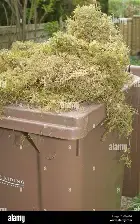


Our Tree & Garden Services
Need professional hedge cutting, tree work or garden maintenance? We also provide:
Areas We Cover
Professional hedge cutting and tree services across:
Helpful Guides
-
What Does a Tree Surgeon Do? A Complete Guide for Staffordshire Homeowners
-
When Should a Tree Be Removed? Warning Signs Every Homeowner Should Know
-
Conifer Hedge Maintenance: How to Keep Your Hedge Healthy and Looking Its Best
-
What Can I Do if My Garden Waste Bin Is Too Heavy for the Council to Empty?
-
How Do You Empty Old Compacted Garden Waste From a Wheelie Bin?
-
What Should I Do With Garden Waste After Cutting Back an Overgrown Hedge?
-
Complete Guide to Tree Surgery, Tree Removal & Crown Reduction